Honouring the Brave: Strength, Resilience, and Healing for Our Veterans and First Responders
The month of May brings a combination of global reflection, historic remembrance, and modern gratitude.
In the US our colleagues Globally, recognise May as Mental Health Month, an initiative that serves as a timely reminder that mental wellness knows no borders. The invisible burdens carried by those who protect, serve, and defend our communities are a universal human experience. In Australia, our frontline workers—veterans, firefighters, police officers, paramedics, and emergency service personnel—shoulder an extraordinary weight on behalf of the nation.
This month I decided to talk about two significant milestones: International Firefighters Day on the 4th of May and Victory in Europe (VE) Day on the 8th of May. Together, these dates prompt us to reflect on both the immediate, acute pressures faced by today’s first responders and the enduring, historic resilience of our veteran community.
More importantly, these moments invite us to look forward, exploring how we can actively support our heroes through innovative, compassionate, and deeply grounding healing tools like Equine Assisted Mental Health Therapy.
Honouring Courage Under Pressure: The Reality of First Responders
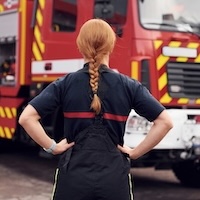
On the 4th of May, communities across the globe marked International Firefighters Day. While it is a day designated to honouring courage under pressure, it also provides an opportunity to recognise the immense, unrelenting demands faced daily by all first responders. Whether navigating catastrophic bushfires, arriving at the scene of a volatile domestic incident, or providing life-saving medical intervention in a split-second crisis, emergency personnel routinely step into environments that most people spend their lives trying to avoid.
When a first responder enters a critical incident, their sympathetic nervous system fires on all cylinders. Adrenaline surges, cortisol levels spike, and the body goes into a highly efficient, acute state of fight-or-flight to ensure survival and operational success. This response is a magnificent evolutionary tool. However, when these critical incidents form a regular part of a person’s working life, the nervous system can become trapped in a state of chronic hypervigilance. The “off-switch” becomes increasingly difficult to locate.
Over time, this persistent state of high alert takes a heavy toll. It manifests as operational stress, compassion fatigue, anxiety, depression, and Post-Traumatic Stress Disorder (PTSD). First responders often report feeling deeply disconnected from their loved ones, emotionally numb at home, or constantly waiting for the next catastrophe to strike. Truly honouring their courage means doing more than thanking them for their service; it means actively providing safe, effective avenues for genuine nervous system recovery.
The Wisdom of the Herd: Regulating Stress and Rebuilding Trust
This is where traditional psychological approaches can sometimes hit a wall, and where the profound, non-verbal power of Equine Assisted Mental Health Therapy comes to the fore. For a first responder whose body has learned to view the world as inherently dangerous, sitting in a sterile room and dissecting a traumatic memory can feel incredibly overwhelming—and sometimes even re-traumatising. Horses offer a different pathway to healing.
As prey animals, horses possess a highly attuned, sophisticated nervous system. Their survival depends entirely on their ability to read non-verbal communication, subtle shifts in energy, and physiological states in their environment. They do not care about rank, medals, or the specific details of a past trauma; they react exclusively to the authentic energy a person brings into the arena in that exact moment. If a person is projecting a calm exterior but their heart is racing with unexpressed anxiety, a horse will mirror that incongruence immediately.
In an equine-assisted therapy session, my clients engage in ground-based interactions with my wonderful horses. Working alongside a horse provides a safe foundation for what psychologists call co-regulation. When a person stands beside a calm, steady horse, their own frayed nervous system begins to sync with the horse’s resting rhythm. This process gently and naturally helps to regularise chronic stress levels.
Furthermore, equine-assisted work is foundational in rebuilding trust in the body. Trauma lives in the physical body—in tight shoulders, a shallow breath, a guarded posture, or a knot in the stomach. By interacting with a horse, learning to respect their boundaries, and noticing how the horse responds to shifts in physical posture, participants can safely reconnect with their own physical sensations. Beautiful therapy horses, like our gentle giant Rooster, excel at holding space for people to drop their protective armour. It teaches the body a profound lesson: that it can experience a state of vulnerability and softness without being in immediate danger. This realization is a monumental step in recovering after critical incidents.
Through quiet interaction—grooming, leading, or even simply standing in the same space—a horse can help a veteran regulate their nervous system. When the horse relaxes, it’s often because the human has finally let their guard down. This “quiet work” allows for a deep form of emotional processing that bypasses the noise of the mind and speaks directly to the heart. We can work on this together.
Echoes of Resilience: VE Day and Purposeful Healing
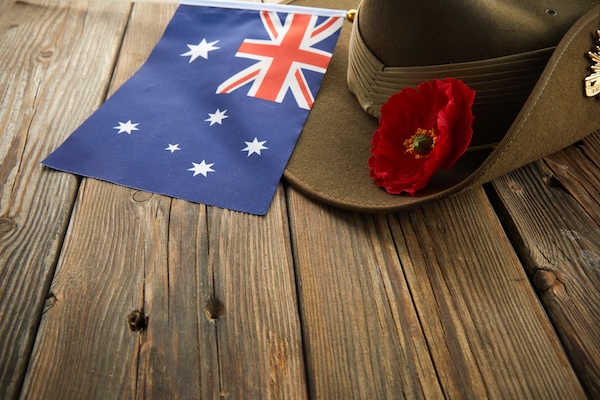
Turning our minds to the 8th of May, we reflect on Victory in Europe (VE) Day, marking the formal conclusion of World War II in Europe. For our veteran community, this anniversary is a poignant reminder of history, immense sacrifice, and the profound resilience of the human spirit.
When we look back at the past, we are gifted with stories of extraordinary endurance. The generations of veterans who came before us faced unimaginable hardships on foreign soil, yet they found ways to piece their lives back together upon returning home, supporting one another and building the foundations of modern Australia. Learning from the past does not mean dwelling on historical wounds; rather, it means drawing strength from the enduring blueprint of veteran resilience.
However, modern resilience does not mean suffering in silence. The veterans of yesteryear often lacked the language, the psychological frameworks, and the societal permission to openly discuss the psychological wounds of war. Today, we have both the opportunity and the responsibility to change that narrative. We can encourage the current generation of veterans toward purposeful healing.
Purposeful healing acknowledges that while you cannot change the past or erase the memories of service, you can actively choose how you carry those experiences forward. It is about transitioning from a mindset of basic survival to one of intentional growth, self-compassion, and reconnection. For a veteran transitioning back into civilian life, the sudden loss of military structure, camaraderie, and an overarching mission can leave a profound void.
Working with horses provides a unique form of renewed purpose. Learning to communicate with an animal that requires absolute presence helps veterans find their footing again, bridging the gap between their military identity and their civilian future in a peaceful, non-judgmental country setting.
Toolkits for the Mind: Practical Mindfulness for the Frontline
Healing is a daily practice that happens inside and outside of therapy. While professional, specialised support is invaluable, having simple, actionable tools to ground yourself during moments of high stress is essential.
Here are a few practical mindfulness tips tailored specifically for veterans and first responders to help regulate the nervous system in daily life:
- The 5-4-3-2-1 Grounding Technique: When memories threaten to overwhelm or anxiety spikes, bring your mind back to the present room. Intentionally name five things you can see, four things you can physically feel (like the fabric of your uniform or the ground beneath your boots), three things you can hear, two things you can smell, and one thing you can taste. This shifts the brain out of the trauma loop and back into the physical present.
- Box Breathing (The Tactical Breath): Used frequently by elite military units and emergency personnel worldwide, this technique actively slows an elevated heart rate. Inhale deeply through your nose for a count of four, hold your breath for four seconds, exhale completely through your mouth for four seconds, and hold empty for four seconds. Repeat this cycle three to four times.
- Somatic Body Scanning: Spend two minutes checking in with your physical frame. Start at your toes and work your way up to your jaw. Notice where you are holding tension or tightness without judgment. Simply breathe into those areas and consciously invite those muscles to soften.
- Nature Orientation: Spend time outdoors without your phone or distractions. Look out at the horizon, watch the movement of leaves in the wind, or feel the sun on your skin. Animals do this naturally; anchoring your awareness to the natural world reminds your nervous system that safety exists right now.
Take the Next Step on Your Journey
The paths walked by our veterans and first responders are paved with immense courage, but they do not have to be walked alone. True strength lies not in suppressing the burden, but in having the bravery to reach out, to heal, and to reclaim your internal peace. Whether you are dealing with the lingering aftereffects of a critical incident, navigating the complex transition out of service, or simply searching for a way to quiet a restless mind, a unique and supportive path is available.
Let me offer you a safe, confidential, and deeply compassionate space where you can experience the transformative power of the herd. You don’t need any prior horse experience—just an open mind. Let our beautiful horses help you lower your guard, ground your nervous system, and guide you toward a path of purposeful healing.
Are you ready to discover the healing power of horses?
Contact me today on 0452 337 322 to book a session or find out more.